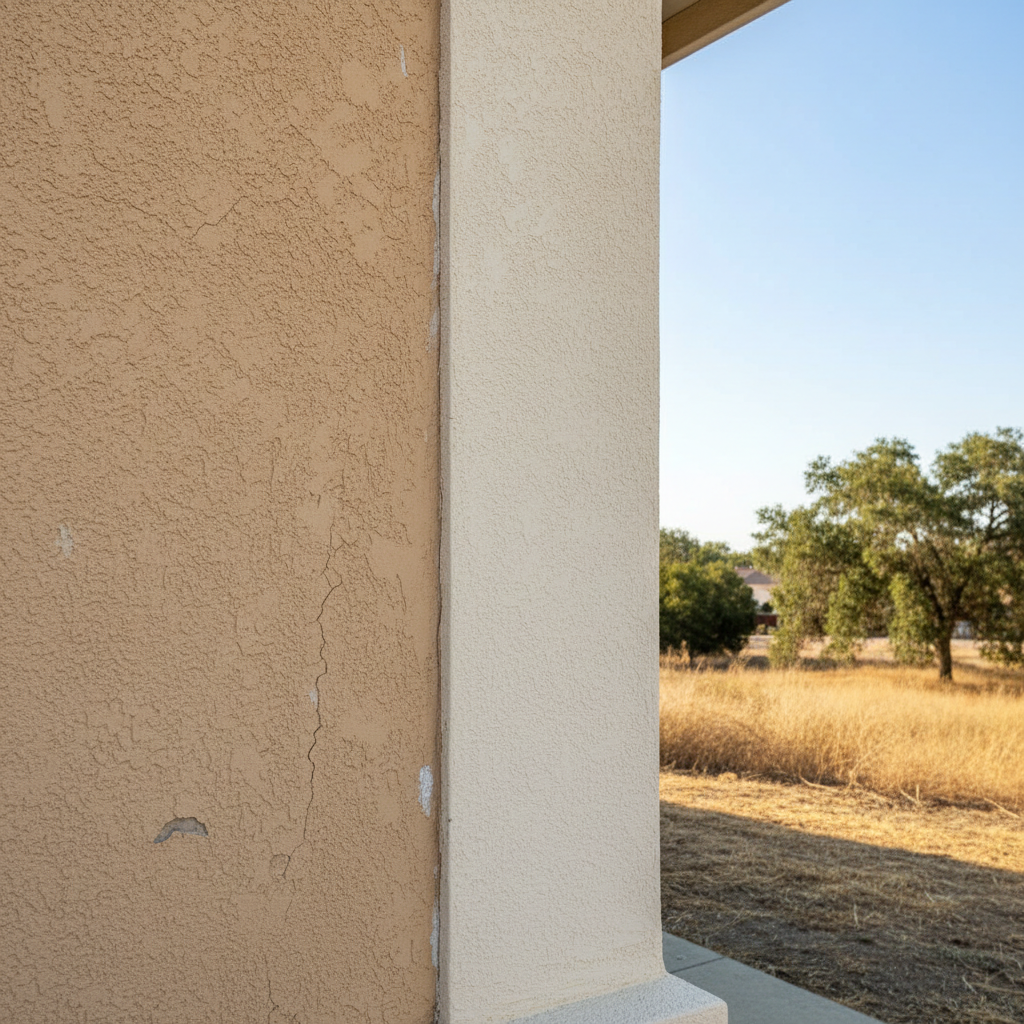
Choosing how to replace failing exterior walls comes down to understanding what our local environment demands. Around Citrus Heights, we deal with blistering summer heat that pushes past 90 degrees for weeks, followed by wet winters that test every inch of a building envelope. When homeowners consider a full stucco upgrade, they are usually weighing traditional cement plaster against modern synthetic systems like Exterior Insulation and Finish Systems (EIFS) or acrylic-modified finishes. Citrus Heights Stucco & Plastering compares how they stack up when put to the test against our valley weather and clay-heavy soils.
Traditional Three-Coat Stucco
Traditional stucco has been standard construction practice in Northern California for 15 to 20 years or more. It is built with a scratch coat, a brown coat, and a finish coat over wire lath and a moisture barrier. When Citrus Heights Stucco & Plastering installs Traditional Stucco, we know it is going to give you a solid, impact-resistant wall that handles physical bumps from stray branches or lawn equipment without flinching.
The downside? Traditional hard-coat stucco is rigid. When the expansive clay soil beneath many Citrus Heights homes shifts with seasonal moisture changes, that movement travels straight up into the framing. Traditional Stucco does not flex well, meaning hairline cracks are almost guaranteed to show up over time. It is heavy, it takes longer to cure, and it requires a breathable paint or finish to keep moisture management working properly.
Synthetic Stucco Systems
Synthetic options, including acrylic finishes and foam-backed exterior insulation systems, take a different approach. Instead of a thick layer of heavy cement, they use lightweight expanded polystyrene boards or high-performance base coats reinforced with fiberglass mesh, finished with a flexible acrylic or elastomeric topcoat.
The major selling point for Synthetic Stucco is flexibility. Those acrylic topcoats stretch and contract right along with the daily temperature swings we get during our long Citrus Heights summers. Homeowners will not see that web of spider cracks popping up nearly as fast. Synthetic Stucco systems also offer better baseline insulation value, which can help save hundreds of dollars per year in cooling costs when July and August are baking the valley. However, they cost more upfront, and if water ever finds a way behind a poorly sealed synthetic barrier, it can get trapped and cause major rot before you notice it.
Cost, Maintenance, and Durability Showdown
When you are paying for materials and labor, Traditional Stucco usually wins on initial price. Synthetic materials and the specialized labor they require push the project cost higher. Maintenance requirements differ, too. Traditional Stucco needs occasional patching and painting every few years to stay watertight. Synthetic Stucco systems demand careful caulking around windows and trim because trapping moisture is the enemy of foam-backed walls.
For sheer durability against blunt force, Traditional Stucco wins. For resistance to thermal cracking and weathering under relentless sun, Synthetic Stucco takes the prize.
If you plan on staying in your home for the long haul and want something that handles the elements without fuss, matching the right system to your specific neighborhood and framing type makes all the difference. Citrus Heights Stucco & Plastering provides Stucco services for homes in Citrus Heights, CA.