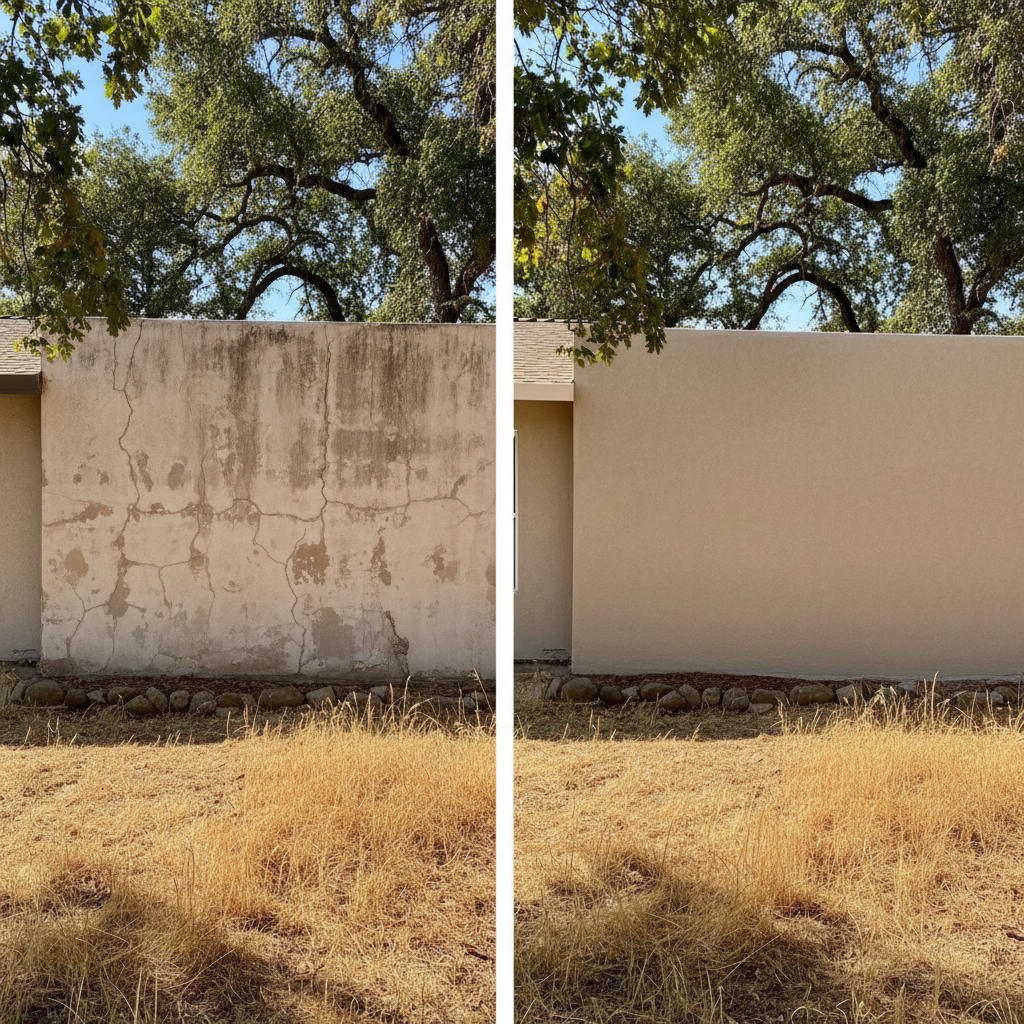
Alright, let's talk stucco. If you're thinking about putting new stucco on your place here in Citrus Heights, or maybe replacing some old stuff, you're gonna run into two main types: traditional (that's cement-based, the old-school kind) and synthetic (which folks often call EIFS, or Exterior Insulation and Finish Systems). Both can look great, don't get me wrong, but they're built differently and perform differently too. As a contractor who's been doing this for years, I've seen the good, the bad, and the ugly of both, so let's dig in.
Traditional Stucco: The Tried and True
This is what most people picture when they hear 'stucco.' It's a mix of cement, sand, lime, and water, applied in layers over a lath (usually wire mesh) that's attached to your wall. It's been around for centuries for a reason – it just works.
Cost
Generally, traditional stucco costs a bit less upfront than synthetic. The materials themselves are cheaper, and while it's labor-intensive, most crews understand the application process really well, which can help keep costs down. You're looking at a solid investment without necessarily breaking the bank.
Durability
This stuff gets hard as a rock once it cures. It's incredibly impact-resistant, which is a big plus if you've got kids playing outside or live on a street where things might accidentally bump into your house. It's also fire-resistant, which is always a good thing to have. However, it's rigid, so if your house shifts even a little (and let's be honest, we get some ground movement around here, especially with our clay soils), hairline cracks can show up. These aren't usually structural issues, but they can be an entry point for water if you don't take care of them.
Maintenance
Pretty low maintenance, honestly. You'll want to wash it periodically to keep it clean, maybe every few years. If you get those hairline cracks I mentioned, you'll definitely want to seal them up to prevent moisture from getting in. Repainting is an option if you want to change the color down the line, but the color is often mixed right into the final coat, so it holds up well on its own.
Appearance
Traditional stucco has that classic, hard, masonry look. You can get different textures, from super smooth to quite rough, and it takes paint beautifully. It just has a very natural, earthy feel to it.
Synthetic Stucco (EIFS): The Modern Option
Synthetic stucco is a different animal altogether. It's a multi-layered system that starts with an insulation board (usually foam) attached to your sheathing, then a base coat with fiberglass mesh, and finally a finish coat that's usually acrylic-based. It's not really stucco in the traditional sense, but it sure looks like it.
Cost
Expect synthetic stucco to be a bit more expensive upfront. The materials are more specialized, and installing it requires a crew that's specifically trained in EIFS systems. You're paying for that insulation value and the specific system components, after all.
Durability
This is where EIFS really shines in some ways. Because of the acrylic finish, it's much more flexible than traditional stucco. This means it's less prone to cracking from minor house movement. It's also incredibly energy-efficient thanks to that foam insulation layer – you'll definitely notice a difference in your energy bills, especially during our hot Citrus Heights summers. However, it's not as impact-resistant as traditional stucco. A hard hit can dent or even puncture it, and then you've got a potential water entry point. Not ideal.
Maintenance
Similar to traditional, it's low maintenance for cleaning. The acrylic finish is very colorfast and resistant to fading. The key here is to repair any damage quickly. Any punctures or cracks need fixing right away to prevent water from getting behind the system, which can cause real problems if it's not draining properly.
Appearance
Synthetic stucco can achieve a wider range of colors and textures, often smoother and more uniform than traditional stucco. It can look very sleek and modern. The color is built right into the finish coat, so it's very durable against fading.
So, Which One Should You Choose?
For most homeowners here in Citrus Heights, and honestly, across much of California, I usually lean towards traditional stucco. Here's why:
- Impact Resistance: It's just tougher against physical damage, which is a common concern for exterior walls.
- Moisture Management: While both need proper installation, traditional stucco is a bit more forgiving if a small crack develops. Water can pass through it and dry out more easily. With synthetic, if water gets behind that foam and can't escape, you can have bigger issues.
- Cost-Effectiveness: You get excellent durability and a classic look for a generally lower initial investment.
- Proven Track Record: It's been used successfully for a very long time in our climate.
Now, if energy efficiency is your absolute top priority, and you're willing to be diligent about inspecting for and repairing any impact damage, synthetic stucco is a fantastic insulator. But you've got to be on top of it. For me, as a guy who's seen a lot of stucco over the years, the robustness and straightforward nature of traditional stucco just make it a more reliable choice for the average homeowner.
No matter which way you go, the most important thing is a quality installation. You need experienced pros who know what they're doing. That's where a company like Citrus Heights Stucco & Plastering comes in. We've done both, and we'll make sure your home looks great and is protected for years to come.